GUIDE
Wanderburg Gameplay: Core Loop, Modules, and Progression Guide
A practical breakdown of Wanderburg gameplay, covering the consumption loop, modular weapon builds, boss mechanics, and meta progression for Early Access players.
Overview
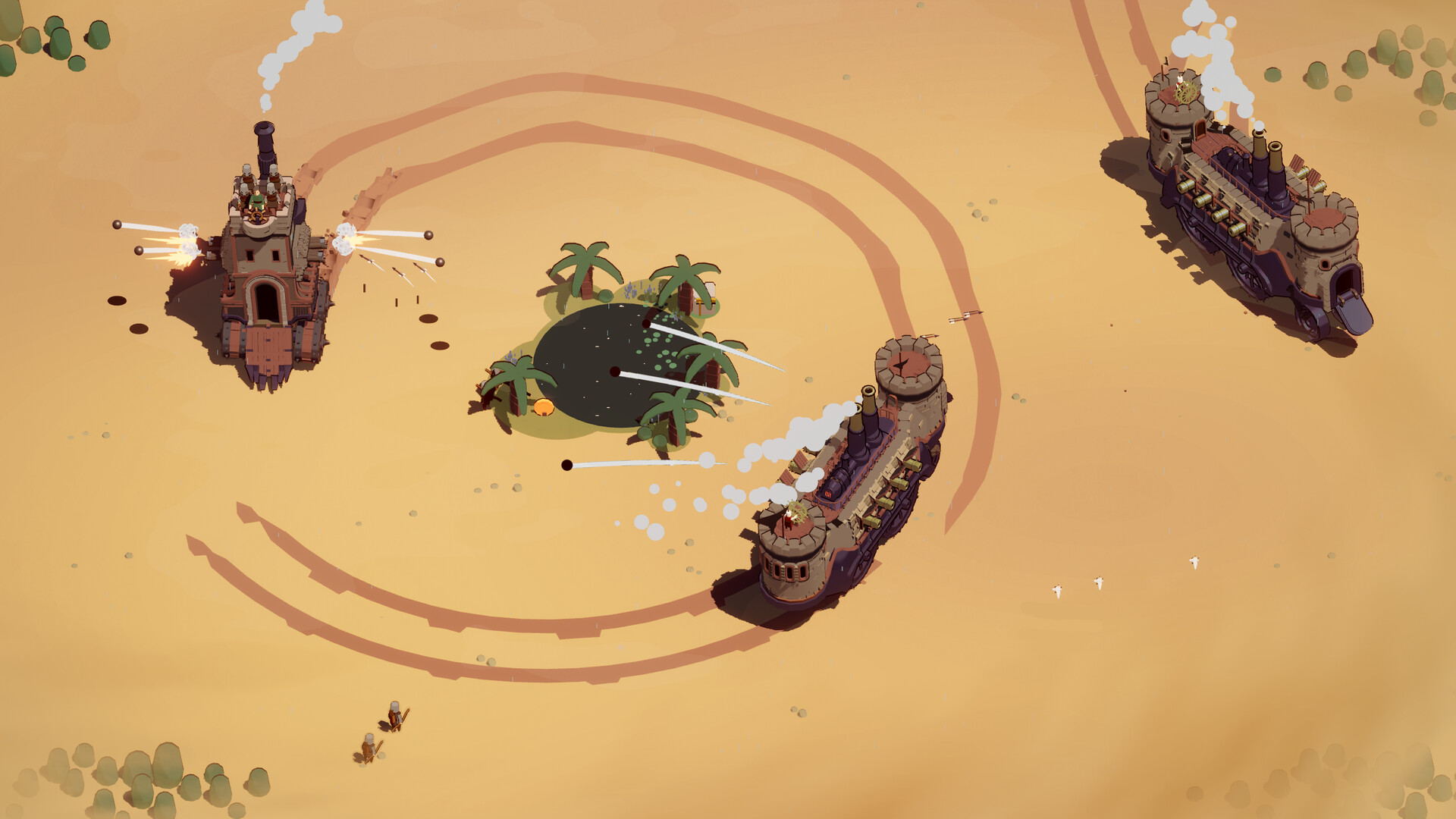
Wanderburg gameplay centers on a direct, physics-driven loop: roll forward, consume everything in your path, and expand your moving fortress to survive escalating threats. Each session places you in an isometric, top-down view across a procedurally generated medieval map where castles hunt and villages flee. Your objective is not to hold ground, but to constantly move, absorb structures, and outmaneuver larger threats before they overwhelm you. The strategic core relies on careful expansion against increasing difficulty, making every steering decision and upgrade choice matter.
The Core Loop: Consumption, Growth, and Physics
**What it is:** The foundation of every run is consumption and growth. You begin as a modest rolling fortress with limited health and firepower, and your primary method of progression is physically driving over and absorbing enemy settlements.
**How it works:** According to the official store description and gameplay previews, you gain experience and chassis expansion by consuming fleeing villages, wandering flocks, and smaller fortresses. Each absorption increases your hit points, unlocks new mounting slots, and provides the resources needed to level up during a run. Movement operates on weight and momentum rather than fast-paced aiming. As TechTimes noted upon launch, the game rewards physics mastery over twitch reflexes. You can activate a speed boost to close gaps or execute high-impact rams, but early access hotfixes adjusted nitro regeneration to begin 0.5 seconds after use, encouraging deliberate pacing over spamming.
**What to watch for:** Your starting HP pool is low, and taking damage while actively consuming enemies can quickly deplete your health. Misjudging momentum on sharp turns or uneven terrain can leave your chassis exposed to enemy artillery. Plan your approach routes carefully, use boost for deliberate strikes or retreats, and monitor your health bar during close-quarters consumption phases.
Building Your Modular Arsenal
**What it is:** Combat capability comes from a modular arsenal that you piece together throughout a run. Your loadout spans cannons, arcane/wizard towers, explosive mines, and ballistas, each occupying specific slots on your expanding chassis.
**How it works:** Module placement fundamentally changes how your castle fights. When you level up, you choose between upgrading auto-attacks (such as archers or mortar) or enhancing your special ability. The official module guides and player walkthroughs show that stacking auto-attack upgrades creates rapid, sustained pressure, while special abilities often provide area denial or burst damage. You will also encounter artifact chests that grant passive multipliers, such as cooldown reduction for top modules or healing per unit consumed. Different weapon types require different tactical approaches; heavy cannons demand careful positioning, while ballistas and arcane towers favor kiting and momentum-based strikes.
**What to watch for:** Module placement affects your center of mass and firing arcs. Overloading one side of your chassis can make steering heavier and less responsive. Track your upgrade paths carefully, as the game presents choices between auto-attack scaling and special ability potency. Experiment with how different weapons synergize with your movement style rather than chasing a single preset build.
Run Structure and Boss Encounters
**What it is:** Runs are structured around sector bosses and fortified stone keeps that act as progression checkpoints. These duels test your current build’s viability and dictate your path through the biome.
**How it works:** Boss fights are won through size, positioning, and module focus. As you consume more structures, your castle grows larger, increasing both your damage output and your physical hitbox. Late-game encounters escalate beyond standard wheeled fortresses. GamingOnLinux’s September review highlights that late-game forms go beyond wheels, introducing castles on legs built for destruction. Enemy fortresses also scale into massive war machines you must outrun and outgun, tapping into a Mortal Engines-style fantasy. If you survive the main boss phase, overtime begins with tougher variants and adjusted mechanics, including a buffed Overtime Mortar that now features faster, constant projectile flight times.
**What to watch for:** Balancing growth is critical. A bigger castle deals more damage but becomes a more obvious target and harder to maneuver in tight spaces. Use the environment and your boost strategically to flank larger threats, focusing fire on their core structures while avoiding concentrated artillery barrages. During overtime, adjust your positioning to account for the faster mortar projectiles and prioritize evasion over prolonged trades.
Meta Progression and Run Resets
**What it is:** Because Wanderburg is a roguelike, every run eventually ends. However, run resets hurt less than they look, with persistent systems ensuring long-term engagement.
**How it works:** Silver, module milestones, and permanent unlocks carry over between sessions. The modular progression system steadily widens your strategic options by unlocking new siege modules, vehicle chassis, artifacts, and captain options that open up entirely different build paths. Progression is tied to consumption, distance traveled, and boss defeats, with achievement thresholds scaling accordingly. The developers have actively rebalanced achievement requirements and module damage values based on community feedback, ensuring that long-term play remains engaging without artificial gatekeeping.
**What to watch for:** Plan your sessions around testing new module combinations and captain synergies rather than chasing a single optimal route. Track which unlocks persist after a run ends, and use silver strategically to accelerate access to late-game chassis variants. The meta progression system is designed to make every failure a stepping stone toward a more devastating war machine, so focus on learning encounter patterns and refining your physics-based steering rather than memorizing static routes.
Keep the page honest
Use the version scope, source status, and verification date above when you quote this guide. If the game UI or source changes, update the claim before expanding the recommendation.
Sources to check
Primary references
- Wanderburg Official Website ↗
- Wanderburg Game Guide: Builds, Modules & Early Access ↗
- Wanderburg Steam Store Page ↗
- Wanderburg Steam Community Hub ↗
- Wanderburg Overview and Mechanics ↗
- TechTimes: Wanderburg Launches on Steam ↗
- GamingOnLinux: Wanderburg Review ↗
- Alphabetagamer: Wanderburg Beta Sign-Up ↗
- Whisper of the House: Progression Unlocks ↗
- XModHub: Wanderburg Walkthrough ↗
- Facebook: Future Games Show Trailer ↗
- GamesBillet: Wanderburg Coverage ↗